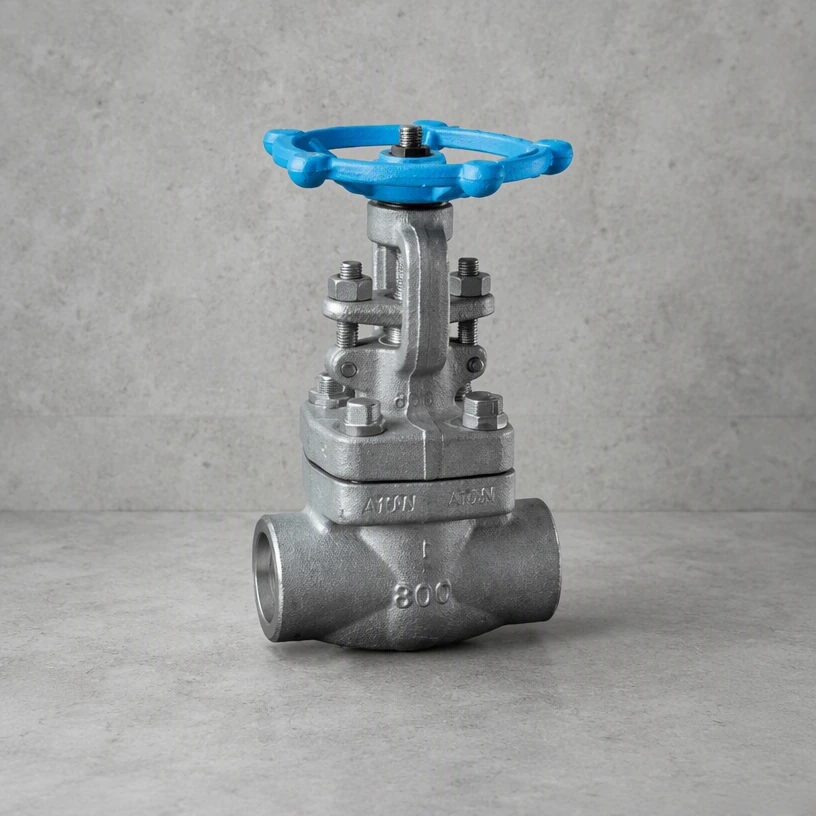
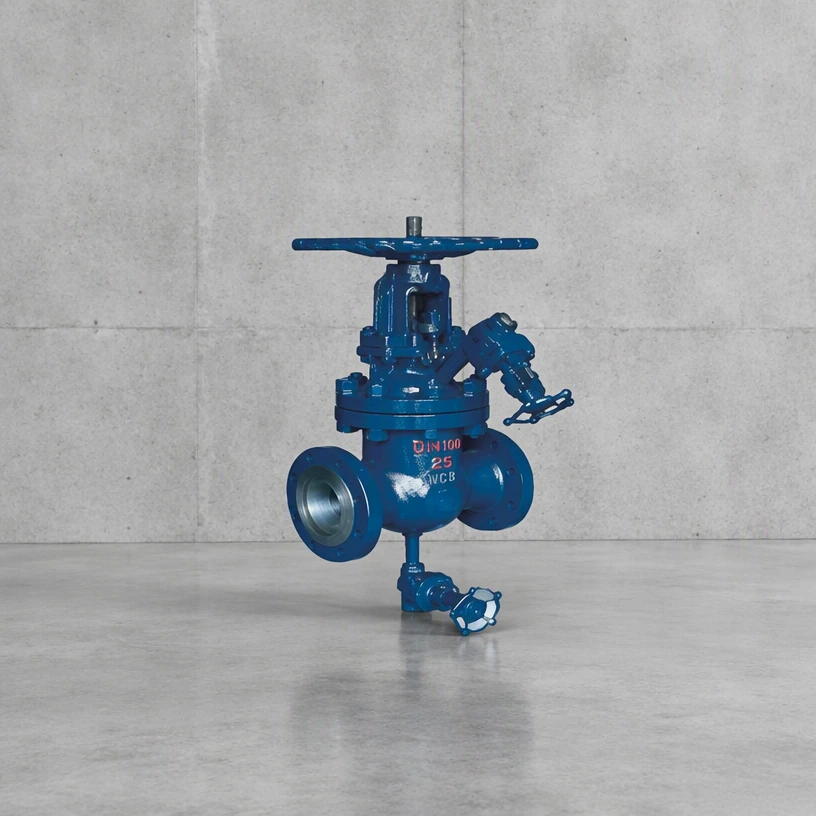
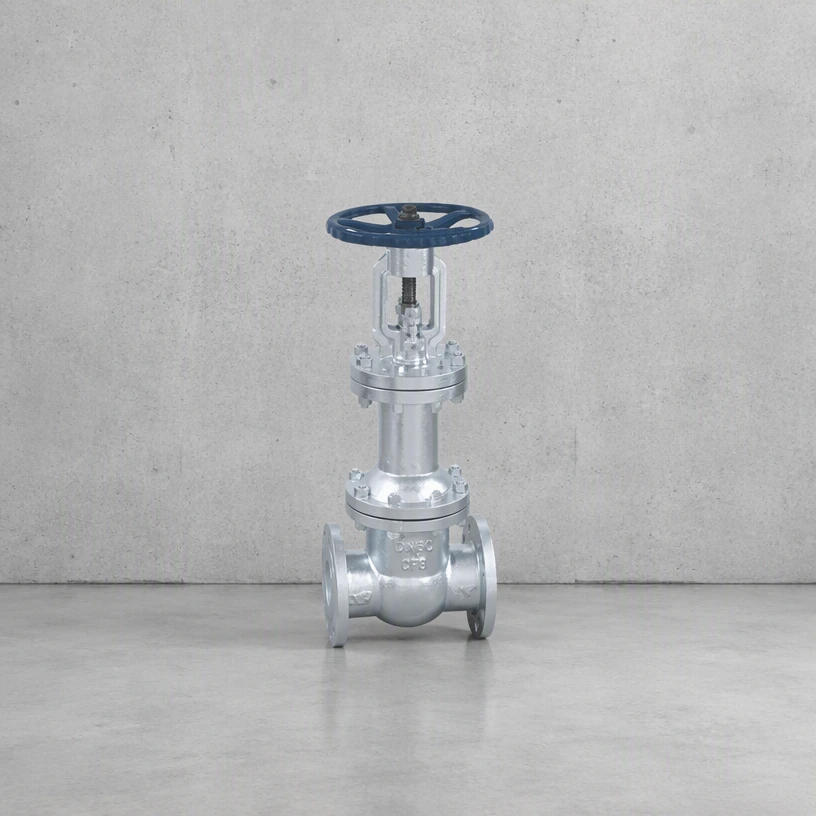
Q1. What is a pneumatic gate valve used for, and where is it used?
A1. A pneumatic gate valve uses compressed air to operate the valve, which suits fast-acting or interlocked isolation duties and sites where an air supply already exists.
Q2. What design variants are available, and how do I tell them apart?
A2. The main variants are solid wedge, flexible wedge and split wedge. A solid wedge is the simplest and suits clean, steady service; a flexible wedge absorbs the distortion that a body sees during thermal cycling and is preferred where temperature changes; a split wedge lets the two discs align independently, which suits high-temperature lines and valves that have to sit closed for long periods. The stem arrangement also differs: rising stem (outside screw and yoke) shows the position visually, non-rising stem saves headroom.
Q3. What does an air actuator give that a handwheel cannot?
A3. Powered operation brings four things a handwheel cannot. Speed — an air actuator strokes the valve in seconds, which is what trip and interlock logic needs. Repeatability — the valve reaches the same position every time, so the seat is loaded consistently instead of by however hard the operator turned. Remote and automatic operation — the valve can sit inside a sequence or be worked from a control room, which matters on unattended stations. Safety in hazardous areas — air produces no spark and needs no flameproof enclosure, which is often why compressed air is preferred to electricity on gas and petrochemical sites. What it does not do is remove the need to define the failure position: state whether the valve must fail closed, fail open or stay in place when the supply is lost.
Q4. How does it compare with the alternatives on the same line?
A4. A gate valve is an isolation valve, and the comparison that matters is with the valves that could do the same job less expensively. A butterfly valve is lighter and cheaper above roughly DN200; a ball valve gives quarter-turn operation and is better where the valve is cycled often; a globe valve is chosen only when some flow regulation is wanted, because it costs pressure drop. The gate valve’s advantages are the unobstructed bore when open, the ability to hold a tight seal at higher pressure, and a straight-through passage that can be cleaned. The disadvantage to accept is that it must be worked between fully open and fully closed.
Q5. What are the common failure modes, and how are they avoided?
A5. The failures seen in service are fairly consistent. Seat leakage from scoring is the most common, usually caused by solids trapped between the faces or by using the valve to throttle an abrasive medium. Packing leakage follows, and is usually a matter of the packing having aged or the stem surface having been damaged rather than a design problem. Stem and thread corrosion matters on buried or humid installations. Disc seizure, where the valve cannot be moved at all, is nearly always a result of the valve having been left in one position for years or of solids compacting in the cavity. All four are addressed by working the valve periodically, keeping it fully open or fully closed, and keeping the line clean.
Q6. How do I select the right one for my line?
A6. Selection revolves around the air supply and the failure position. Establish the available air pressure and whether it is continuously available, then decide what the valve should do if air is lost — stay put, open or close. Cylinder size follows from those two answers, not from the valve size alone.
Q7. How do I order, and what information is needed for a quotation?
A7. Give us the service conditions rather than only a model number: size, pressure rating, medium, temperature and connection. Where a standard applies, name it and the revision. Custom work is normal in this range — end connections, operator type, trim material and surface treatment are all specified per order.