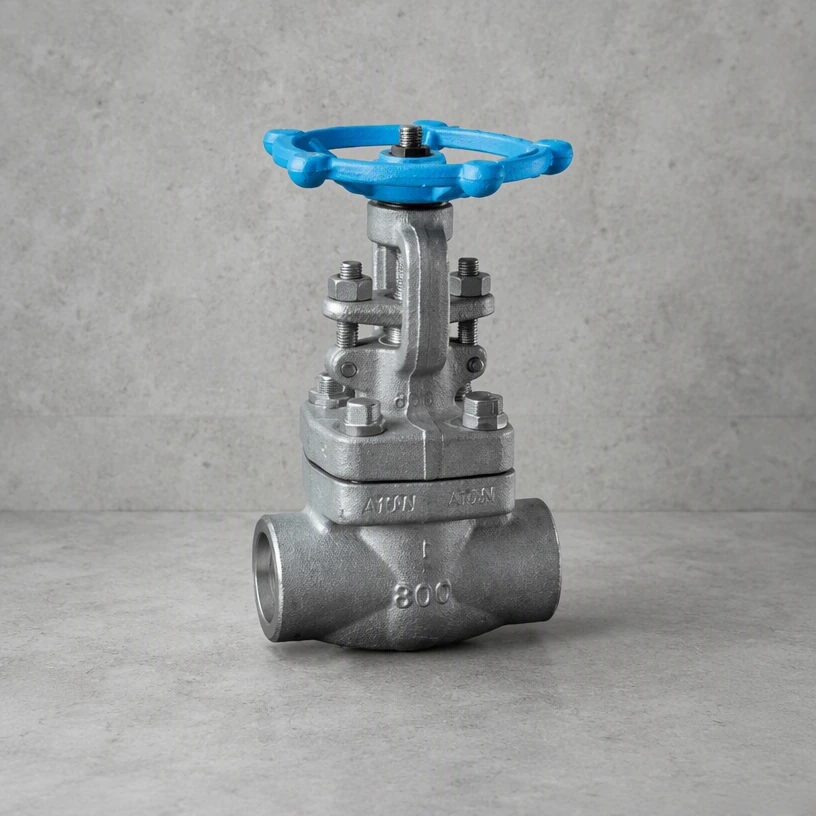
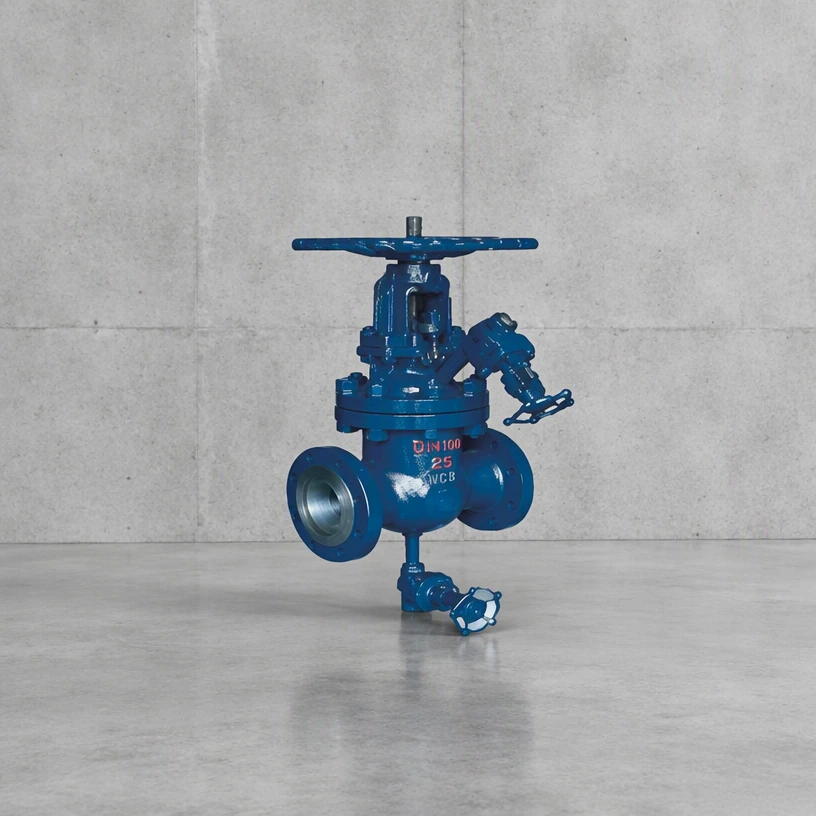
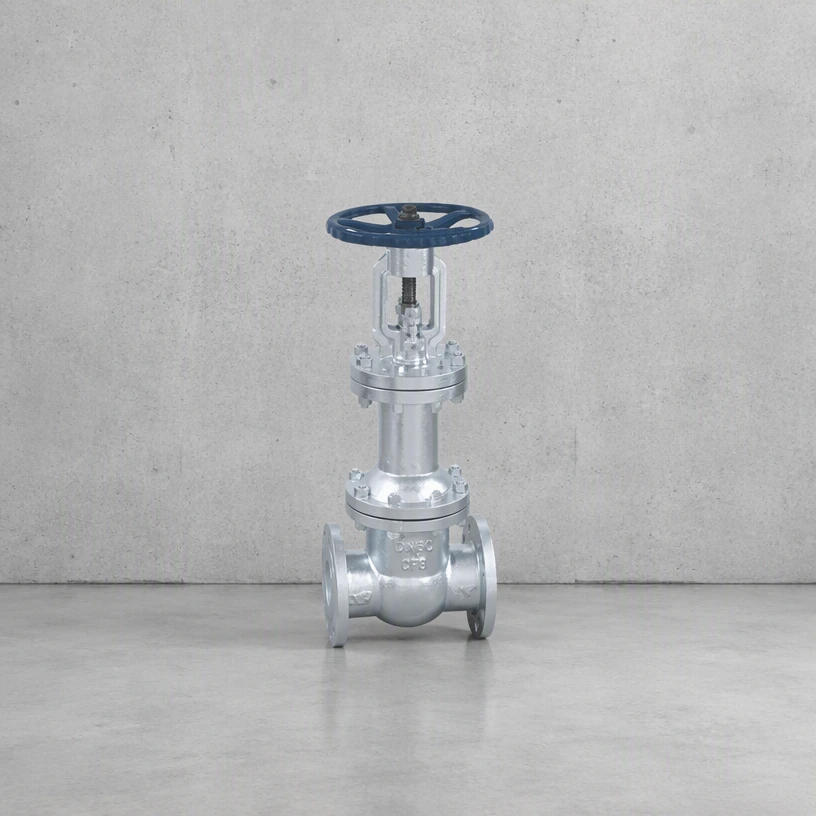
Q1. What is a low temperature stainless steel gate valve used for, and where is it used?
A1. A low temperature gate valve is built for media that stay liquid only when cold — LNG, liquid ammonia and similar. Its purpose is isolation without letting the cold reach the stem seal, because a frozen packing stops sealing and can lock the valve.
Q2. How is the valve pressure tested before delivery?
A2. Testing is to API 598. The shell test is at 1.5 times the 38 °C rating and the seat test at 1.1 times, with the acceptance judged against ISO 5208 leakage rates. Two practical points are worth fixing before the order is placed: whether the seat test is carried out on both directions or only on the specified flow direction, and whether a test certificate with the actual recorded figures is required or a simple pass statement will do. On isolation valves for gas and for hazardous media the test figures are normally asked for and filed with the maintenance record.
Q3. What decides the material for low temperature service?
A3. Low temperature service is decided by impact toughness, not by strength. Austenitic stainless such as CF8M is the usual choice for LNG and liquid ammonia because it keeps its ductility down to the lowest temperatures a plant will see; low temperature carbon steel such as LCB is adequate where the minimum stays above roughly -46 °C. Every pressure-retaining part should carry a documented impact test at the design minimum temperature — this is the one service where a material certificate without the impact result is not enough. Where the line cycles between cold and ambient, the contraction and expansion have to be handled in the piping design rather than absorbed by the valve.
Q4. What are the common failure modes, and how are they avoided?
A4. Four things cause most of the trouble. Scoring of the seating faces from trapped particles. Gland leakage from packing that has hardened or from a scratched stem. Corrosion of the stem and the bonnet bolting where water sits. And seizure of the disc after long periods without operation. None of these require a different valve — they require handling and a maintenance habit: keep the pipework clean before commissioning, operate the valve at least annually through its full travel, do not leave it part open, and inspect the packing and stem whenever the line is down.
Q5. How do I choose between austenitic and duplex stainless grades?
A5. Start from the medium rather than from a grade list. CF8 (304 type) is adequate for water, steam and mildly aggressive chemical service; CF8M (316 type) is the usual minimum where chlorides, dilute acids or urea are present. Above roughly 60 °C, chlorides become a stress-corrosion cracking risk for austenitic grades whatever the molybdenum content, and duplex stainless is the standard answer because it resists both cracking and pitting better. Put the medium, its concentration, the chloride level and the temperature into the enquiry — those four figures decide the grade, and a specification that says only ‘stainless steel’ leaves the choice open to whoever quotes it.
Q6. How do I select the right one for my line?
A6. The selection driver is the service temperature and whether the line runs cold continuously or cycles. The lower the temperature, the longer the bonnet extension needs to be, and the more the design depends on impact-tested materials. State the minimum temperature including upset and standby conditions.
Q7. How do I order, and what information is needed for a quotation?
A7. Give us the service conditions rather than only a model number: size, pressure rating, medium, temperature and connection. Where a standard applies, name it and the revision. Custom work is normal in this range — end connections, operator type, trim material and surface treatment are all specified per order.