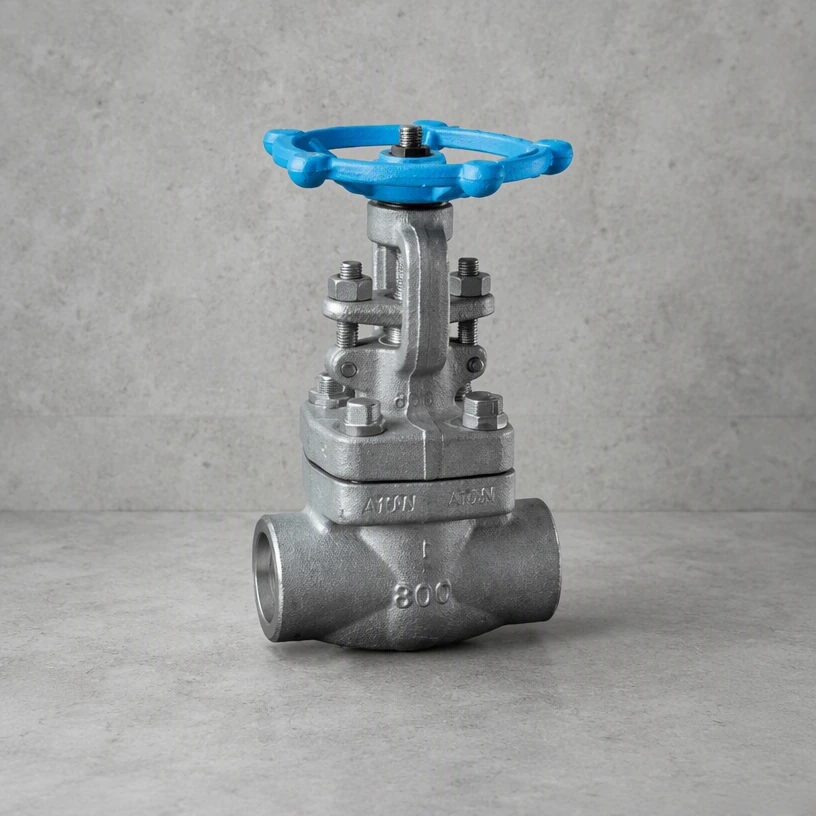
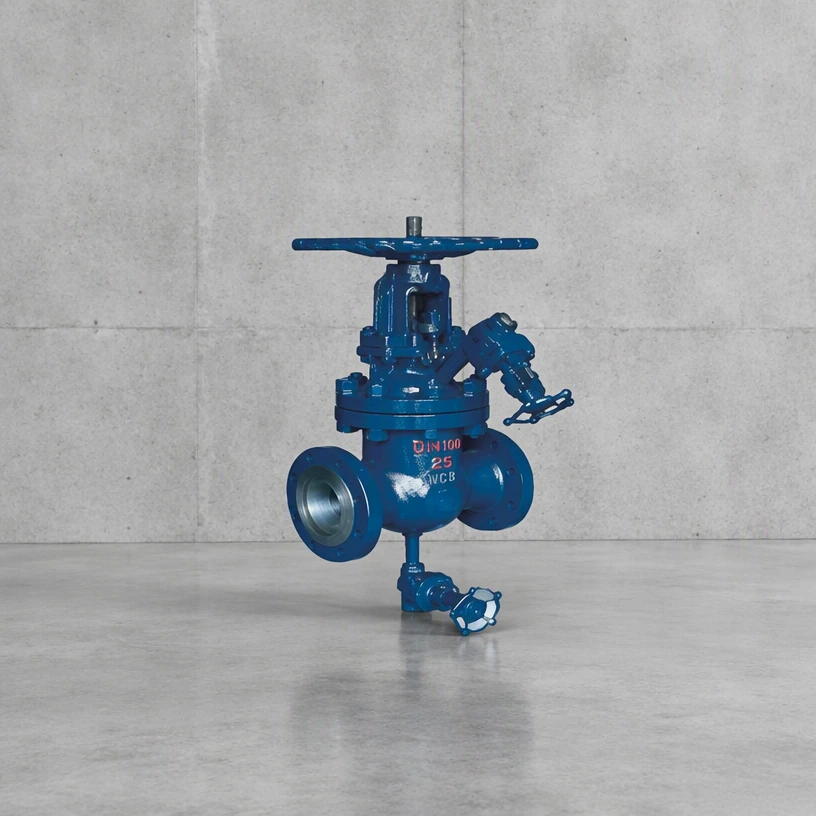
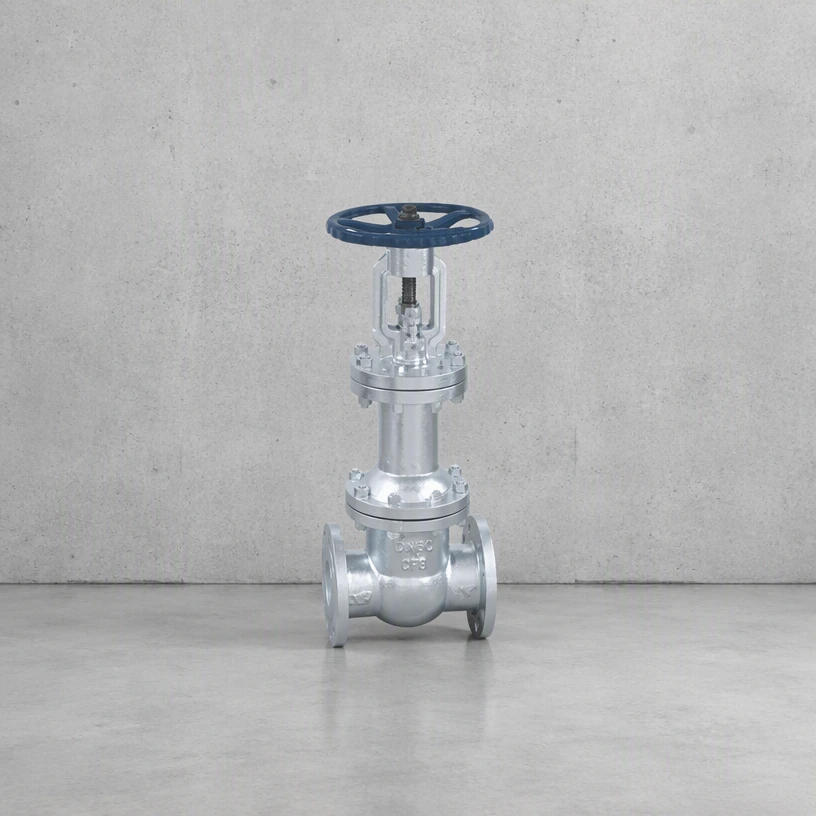
Q1. What is a bevel gear gate valve used for, and where is it used?
A1. A bevel gear gate valve is a gate valve fitted with a gearbox so that one person can operate a large or stiff valve without a long lever.
Q2. Which standards does this valve follow?
A2. Valves in this range are designed and manufactured in accordance with recognised industry standards rather than to a single in-house specification. The pressure and temperature framework normally follows ASME B16.34; ASME B16.10 covers face-to-face dimensions and ASME B16.5 the flange drilling; API 600 is the usual design reference for steel gate valves in the larger sizes, and API 6D where the valve is intended for pipeline service. Pressure testing follows API 598. Standards are applied as the design basis — the certificate of conformity issued with a delivery states which standard and which revision each item was built and tested to, so the drawing should be read together with that certificate.
Q3. When is a gearbox the right answer instead of an actuator?
A3. A gearbox is the right answer when the problem is effort rather than control: a large valve that one person has to be able to operate, with no requirement to work it remotely or from a sequence. It is simple, needs no power supply and cannot fail in a way that leaves the valve in an undefined position. Move to an actuator when the valve has to be operated from a control room, worked on a schedule, or interlocked with other equipment. Note that if an actuator is fitted, the gearbox normally becomes redundant rather than complementary.
Q4. How is the valve pressure tested before delivery?
A4. Every valve is shell-tested and seat-tested before dispatch. The shell test is carried out at 1.5 times the rated pressure at 38 °C, with the valve partly open, to prove the pressure boundary; the seat test is at 1.1 times, with the valve closed, to prove the closure. Holding time is set by the standard according to size. Acceptance is normally quoted against ISO 5208: Rate A means no visible leakage, while the lower rates permit a defined volume of leakage over the test period. The rate that applies should be stated in the specification — on gas, toxic or metered service Rate A is the usual requirement, while on water service a lower rate is often accepted.
Q5. How does it compare with the alternatives on the same line?
A5. The choice is usually between a gate valve and a globe valve, or between a gate valve and a butterfly valve. Against a globe valve, a gate valve has a much lower pressure drop when open because the bore is unobstructed, but it cannot throttle — a globe valve can regulate flow, at the cost of a permanent pressure loss. Against a butterfly valve, a gate valve costs more at small sizes but holds tight more easily and takes higher pressure; the butterfly is smaller, lighter and cheaper as size grows, which is why large water lines often use it instead. Gate valves are therefore chosen on lines where the valve sits fully open for long periods and must isolate without loss.
Q6. How do I select the right one for my line?
A6. The gear ratio is set by the operating torque at the specified differential pressure, and that figure has to come from the line data rather than from the valve size. Two points are worth settling at enquiry: the direction of rotation the operator will expect, and whether the gearbox has to be weatherproofed or lockable, since on a remote line the gearbox is often the only thing between an unauthorised hand and the main.
Q7. How do I order, and what information is needed for a quotation?
A7. Send the line size, pressure class, medium, working temperature and required connection. Add anything the line demands — sour service, low temperature, a pigging requirement, a control-room signal — and the quotation will come back with the material and seat selection confirmed rather than assumed. Non-standard sizes, alternative operators, trim material and coating can all be produced to order.