Q1. What is a bellows sealed high temperature gate valve used for, and where is it used?
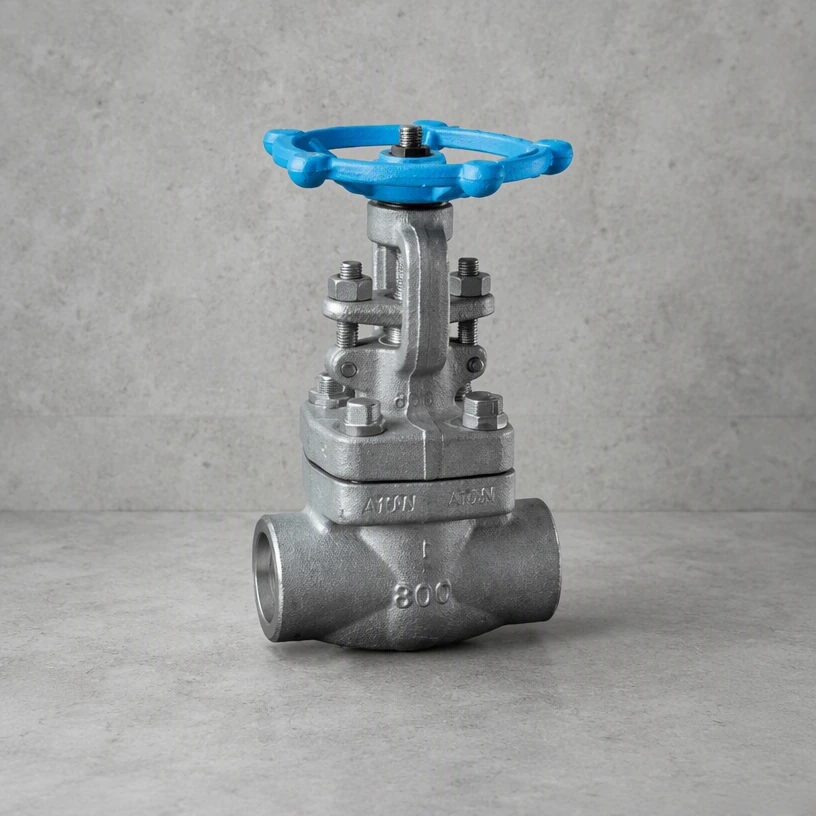
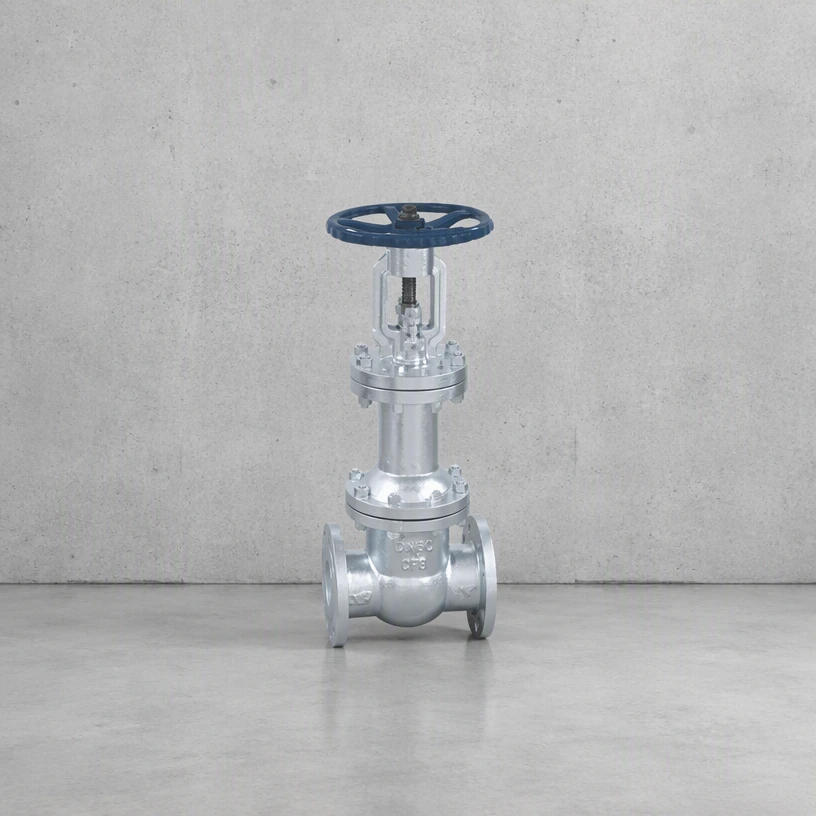
A1. This is a bellows-sealed gate valve configured for elevated temperature service, where both the stem seal and the seating faces have to survive continuous heat.
Q2. What design variants are available, and how do I tell them apart?
A2. Bellows-sealed gate valves differ mainly in the bellows itself: single-ply or multi-ply, and whether a back-up packing is fitted on top of the bellows. The bellows is welded between the stem and the bonnet, so the medium never reaches the packing; a back-up packing adds a second barrier and allows the valve to remain operable if the bellows eventually fails.
Q3. What should be done differently when a valve has to work hot?
A3. Use the design temperature rather than the normal operating figure, and apply the pressure–temperature derating for the material — the allowable pressure at 500 °C can be well under half the room-temperature rating. Thermal expansion is handled outside the valve: the pipework is designed so that the valve is not the component that absorbs movement. A bolted bonnet needs its bolting re-tightened at temperature after the first heat-up, following a procedure rather than by feel. On steam lines the valve should be set so that condensate does not collect in the bonnet cavity, and where the valve is welded in, the procedure has to be qualified for both materials of the joint.
Q4. How does it compare with the alternatives on the same line?
A4. A gate valve is an isolation valve, and the comparison that matters is with the valves that could do the same job less expensively. A butterfly valve is lighter and cheaper above roughly DN200; a ball valve gives quarter-turn operation and is better where the valve is cycled often; a globe valve is chosen only when some flow regulation is wanted, because it costs pressure drop. The gate valve’s advantages are the unobstructed bore when open, the ability to hold a tight seal at higher pressure, and a straight-through passage that can be cleaned. The disadvantage to accept is that it must be worked between fully open and fully closed.
Q5. What are the common failure modes, and how are they avoided?
A5. The failures seen in service are fairly consistent. Seat leakage from scoring is the most common, usually caused by solids trapped between the faces or by using the valve to throttle an abrasive medium. Packing leakage follows, and is usually a matter of the packing having aged or the stem surface having been damaged rather than a design problem. Stem and thread corrosion matters on buried or humid installations. Disc seizure, where the valve cannot be moved at all, is nearly always a result of the valve having been left in one position for years or of solids compacting in the cavity. All four are addressed by working the valve periodically, keeping it fully open or fully closed, and keeping the line clean.
Q6. How do I select the right one for my line?
A6. Confirm the continuous operating temperature, not just the peak, and check it against the bellows material and the seat material separately — they usually have different limits. Where temperature cycles, the fatigue life of the bellows becomes a selection factor rather than an afterthought.
Q7. How do I order, and what information is needed for a quotation?
A7. Ordering starts from the line list: tag number, size, class, medium, temperature, connection and operating method. Send that and we will confirm material and seat selection against the medium, flag anything that is likely to cause trouble on site, and quote accordingly. Special sizes, operators and materials are produced to order.