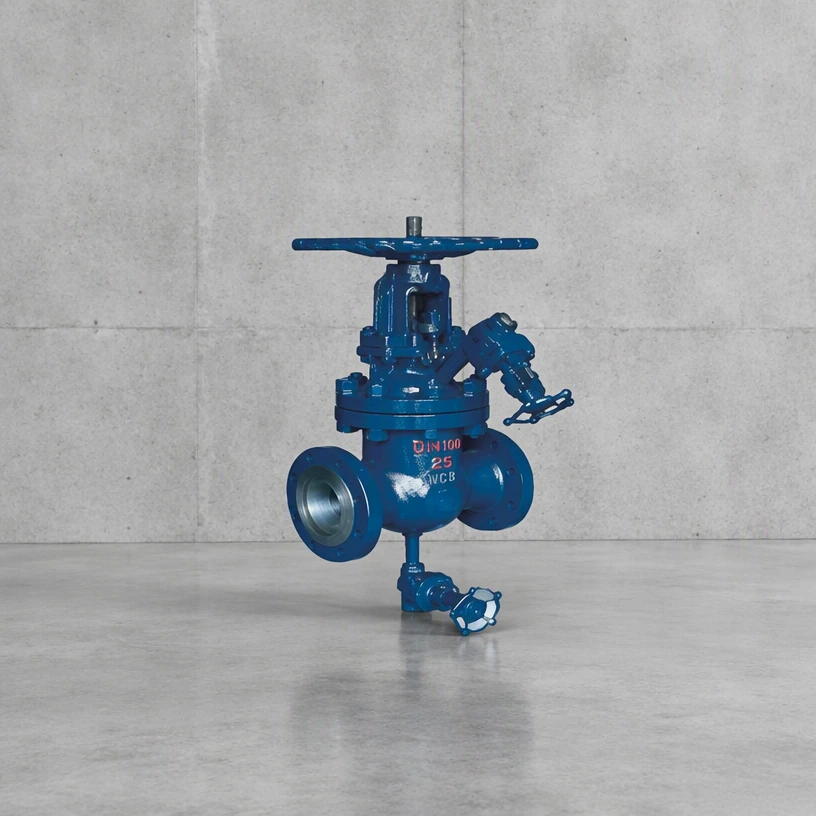
Q1. What is a blow-off drain valve used for, and where is it used?
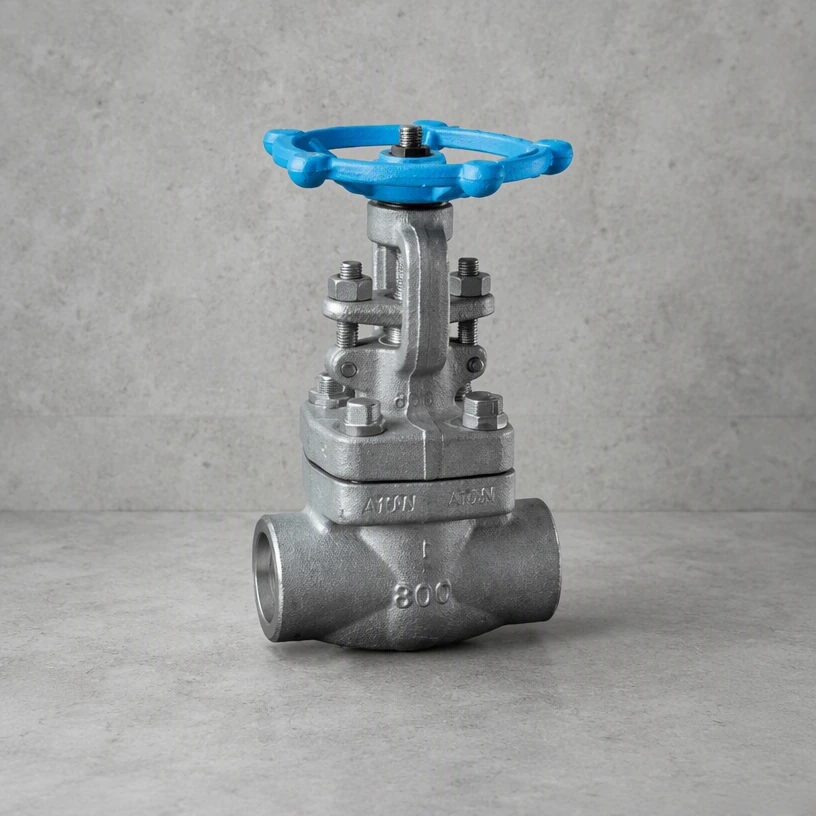
A1. A globe valve regulates flow as well as isolating it, which is what separates it from a gate valve. It is used where the flow has to be trimmed rather than simply stopped: bypass lines around control valves, drain and vent lines, sampling connections, steam lines where pressure is dropped in stages, small-bore lines adjusted by hand, and instrument and gauge lines on the smaller sizes. The seat is a plug descending onto a ring, so the flow turns twice through the body and a permanent pressure loss is the price paid for the ability to regulate. On clean service and at small sizes that price is acceptable; on a large line carrying pumped fluid it is not, which is why the globe valve is rarely used as a main-line isolation valve.
Q2. What body materials and seating arrangements can be specified?
A2. Bodies are carbon steel (WCB or forged A105) for water, oil and steam, chromium-molybdenum steel where steam temperature is high, and CF8 / CF8M stainless for corrosive service. The seat is a ring rather than a face, so it can be hard-faced separately. Common combinations are 13Cr for general service, hard alloy overlay where the valve throttles or sees high temperature, and soft seats (PTFE or rubber) where bubble-tight shut-off is required at moderate temperature. On this type the packing is the first component to give trouble, so graphite or PTFE packing is specified according to temperature.
Q3. How is the valve pressure tested before delivery?
A3. Two practical points are worth fixing before the order is placed: whether the seat test is carried out in both directions or only in the specified flow direction, and whether a test certificate with the recorded figures is required or a simple pass statement will do. On isolation valves for gas and hazardous media the recorded figures are normally asked for and filed with the maintenance record, because they are the baseline against which later leakage is judged.
Q4. How does it compare with the alternative valve types on the same line?
A4. Choose by duty first and by price second. Isolation over long periods with low loss points at a gate or a ball valve; frequent on–off points at a ball valve; flow regulation points at a globe or a control valve; tight shut-off on gas at a soft-seated ball; and space-constrained large lines point at a butterfly. The cost comparison only becomes meaningful once the duty is fixed, because the cheapest valve of the wrong type is the expensive one.
Q5. What are the common failure modes, and how are they avoided?
A5. A valve that fails early usually fails for one of four reasons: it was selected on the normal condition and then met the extreme one, it was installed against the flow arrow, it was used for a duty it was never designed for such as throttling or as the sole isolation point, or it was commissioned without the pipework being cleaned. Only the first of those is a selection issue; the other three are found on site, which is why the installation checks matter as much as the specification.
Q6. How do I select the right one for my line?
A6. Selection starts from the service, not from the catalogue. Fix the medium and its concentration first, because that decides the body material and the seating. Then the design pressure and the design temperature together, since the allowable pressure at temperature is lower than the cold rating and it is the hot figure that governs. Then the size, the connection, and how often the valve will be operated, which is what decides between a handwheel, a gearbox and an actuator. Bring those five answers to the enquiry and the rest of the selection follows from them.
Q7. How do I order, and what information is needed for a quotation?
A7. Send the line size, pressure class, medium, working temperature and required connection. Add anything the line demands — sour service, low temperature, a pigging requirement, a control-room signal — and the quotation will come back with the material and seat selection confirmed rather than assumed. Non-standard sizes, alternative operators, trim material and coating can all be produced to order.