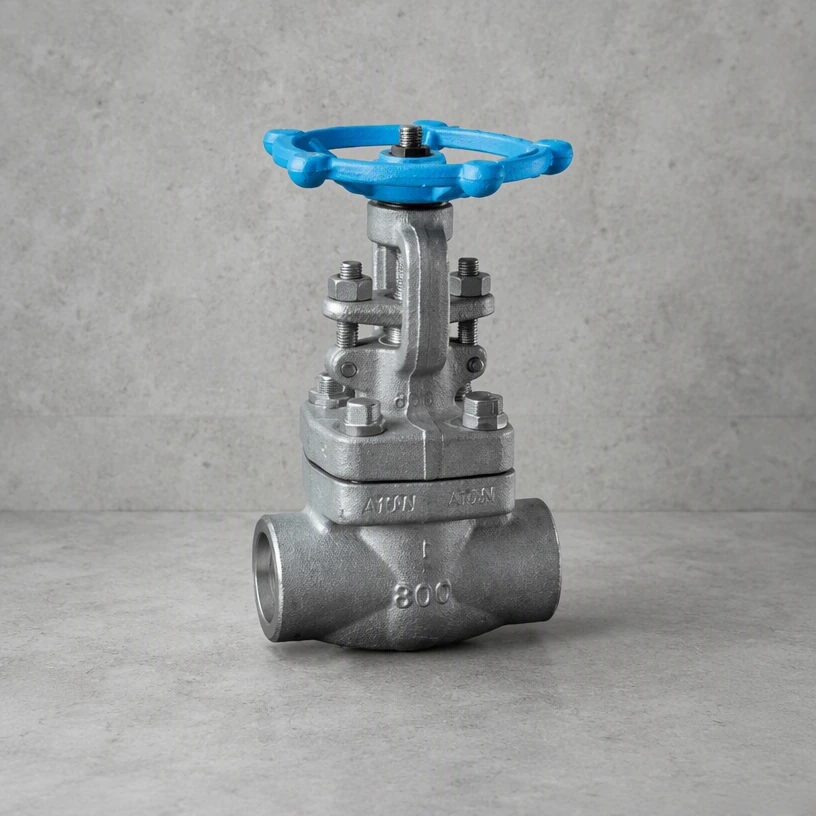
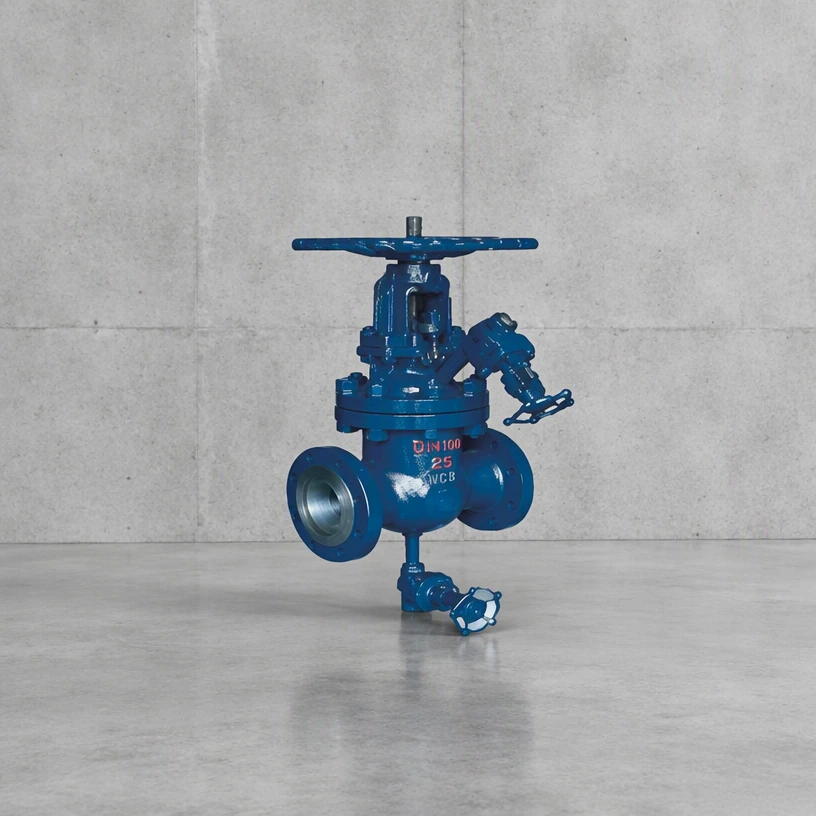
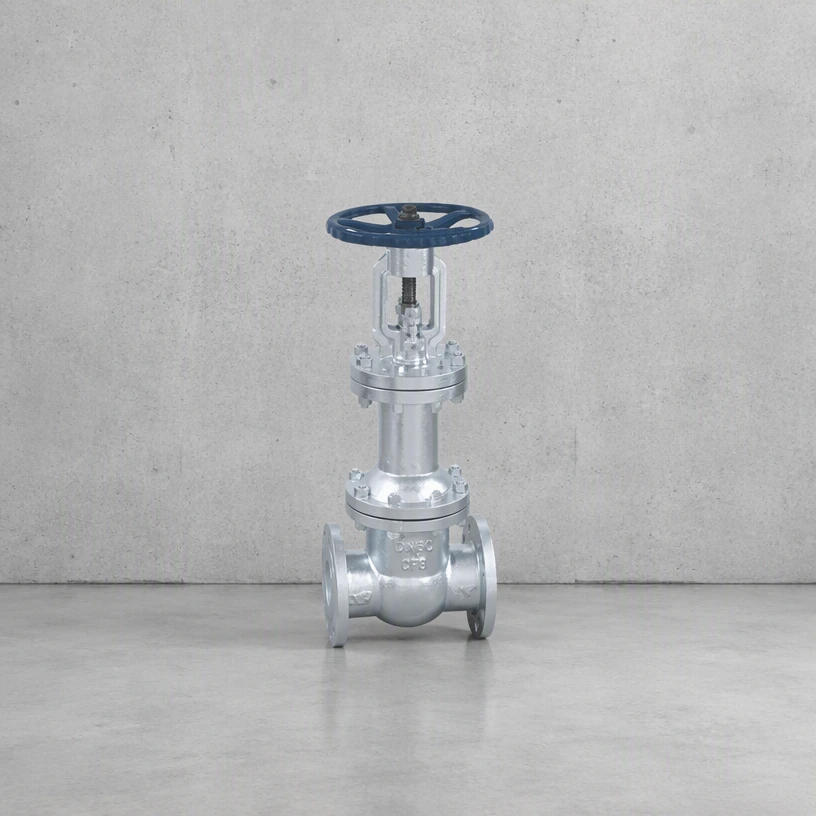
Q1. What is a forged steel gate valve used for, and where is it used?
A1. A gate valve is an isolation valve: it lifts a gate out of the flow path, so it works between fully open and fully closed and is never used to regulate. It is the standard choice where a line has to be left open for long periods and then shut off tightly — water and waste-water mains, cooling-water and fire-water headers, plant steam and condensate headers, oil and gas gathering lines, and the block-valve position on either side of a pump or a control valve. Because the gate travels at right angles to the flow, the bore is almost straight through when the valve is open and the pressure loss is the lowest of any isolation valve. That combination — unobstructed bore plus tight shut-off — is the reason it is still the default on large lines. In forged construction it is used on small-bore high-pressure duty — steam and instrument lines, and services where a sound, radiographically clean body is required.
Q2. What design variants are available, and how do I tell them apart?
A2. The main variants are solid wedge, flexible wedge and split wedge. A solid wedge is the simplest and suits clean, steady service; a flexible wedge absorbs the distortion that a body sees during thermal cycling and is preferred where temperature changes; a split wedge lets the two discs align independently, which suits high-temperature lines and valves that have to sit closed for long periods. The stem arrangement also differs: rising stem (outside screw and yoke) shows the position visually, non-rising stem saves headroom.
Q3. What is the difference between a forged body and a cast body?
A3. A forged body is formed from solid bar or billet under pressure, so the material is worked and its grain flows around the shape instead of being cast into it. There are no shrinkage cavities or gas pores, and the part can be examined volumetrically — radiographic or ultrasonic — and traced as a single piece of known origin. That is why forged bodies are used on small-bore high-pressure duty — steam and instrument lines, hydrogen and ammonia service, and the higher classes where casting quality is harder to assure in a thick wall. A casting is cheaper and allows a more complex internal shape and a larger bore, and in the common sizes at standard classes the quality is well controlled by the casting standard and by radiographic examination. The working rule is that small and thick-walled goes to forging, large and complex goes to casting.
Q4. Which standards is this valve designed and tested to?
A4. Where a customer specifies a different standard — DIN, EN, GB or a client specification — it can be worked to, but it should be named at enquiry stage, because it changes dimensions, the material list and the test acceptance at the same time. Two details are worth settling early because they are easy to leave to assumption: the revision of the standard that applies, and which edition of the pressure–temperature tables is being used for the rating.
Q5. How is the valve pressure tested before delivery?
A5. Every valve is shell-tested and seat-tested before dispatch. The shell test is at 1.5 times the rated pressure at 38 °C with the valve partly open, proving the pressure boundary; the seat test is at 1.1 times with the valve closed, proving the closure. Holding time follows the standard and the size. Acceptance is normally quoted against ISO 5208: Rate A means no visible leakage, while lower rates permit a defined leakage over the test period. The rate that applies should be written into the specification — on gas, toxic or metered service Rate A is the usual requirement.
Q6. How do I select the right one for my line?
A6. State the standard you want the valve built to, and the revision, rather than assuming one. A valve can be built to ASME, DIN, EN, GB or a client specification, and the choice changes face-to-face dimensions, flange drilling, the material list and the test acceptance at the same time — so it cannot be settled after the order. Where no standard is named, say which dimension is critical on your line: the face-to-face length where space is tight, or the flange drilling where the valve must bolt up to an existing flange.
Q7. How do I order, and what information is needed for a quotation?
A7. Ordering starts from the line list: tag number, size, class, medium, temperature, connection and operating method. Send that and we will confirm material and seat selection against the medium, flag anything that is likely to cause trouble on site, and quote accordingly. Special sizes, operators and materials are produced to order.