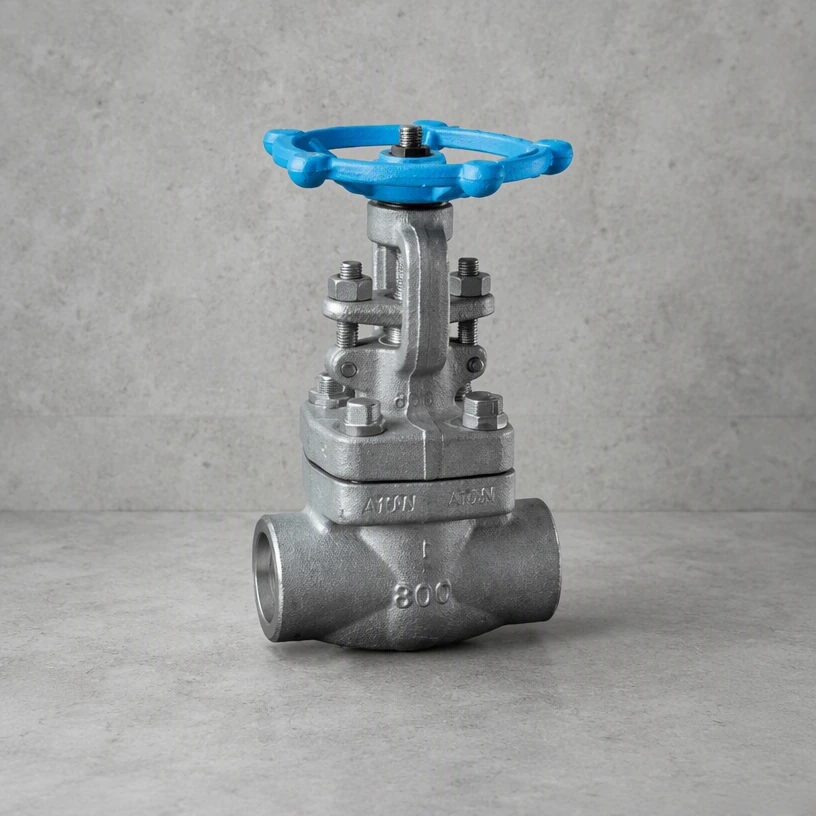
Q1. What is a forged steel globe valve (model J41H) used for, and where is it used?
A1. A globe valve regulates flow as well as isolating it, which is what separates it from a gate valve. It is used where the flow has to be trimmed rather than simply stopped: bypass lines around control valves, drain and vent lines, sampling connections, steam lines where pressure is dropped in stages, small-bore lines adjusted by hand, and instrument and gauge lines on the smaller sizes. The seat is a plug descending onto a ring, so the flow turns twice through the body and a permanent pressure loss is the price paid for the ability to regulate. On clean service and at small sizes that price is acceptable; on a large line carrying pumped fluid it is not, which is why the globe valve is rarely used as a main-line isolation valve. In forged construction it is used on small-bore high-pressure duty — steam and instrument lines, and services where a sound, radiographically clean body is required.
Q2. What body materials and seating arrangements can be specified?
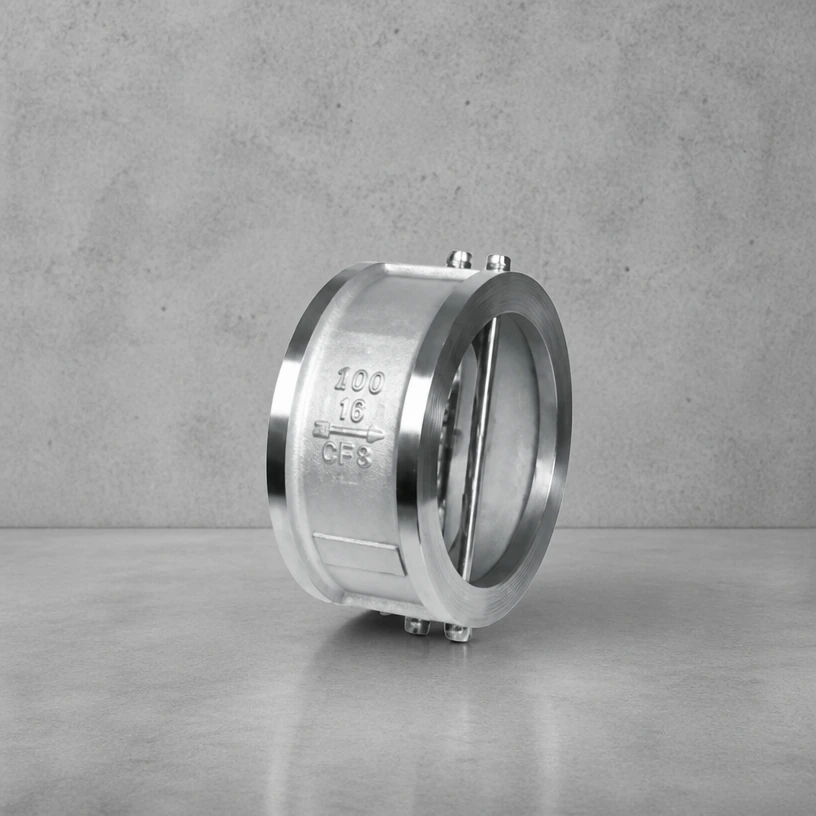
A2. Bodies are carbon steel (WCB or forged A105) for water, oil and steam, chromium-molybdenum steel where steam temperature is high, and CF8 / CF8M stainless for corrosive service. The seat is a ring rather than a face, so it can be hard-faced separately. Common combinations are 13Cr for general service, hard alloy overlay where the valve throttles or sees high temperature, and soft seats (PTFE or rubber) where bubble-tight shut-off is required at moderate temperature. On this type the packing is the first component to give trouble, so graphite or PTFE packing is specified according to temperature.
Q3. What is the difference between a forged body and a cast body?
A3. A forged body is formed from solid bar or billet under pressure, so the material is worked and its grain flows around the shape instead of being cast into it. There are no shrinkage cavities or gas pores, and the part can be examined volumetrically — radiographic or ultrasonic — and traced as a single piece of known origin. That is why forged bodies are used on small-bore high-pressure duty — steam and instrument lines, hydrogen and ammonia service, and the higher classes where casting quality is harder to assure in a thick wall. A casting is cheaper and allows a more complex internal shape and a larger bore, and in the common sizes at standard classes the quality is well controlled by the casting standard and by radiographic examination. The working rule is that small and thick-walled goes to forging, large and complex goes to casting.
Q4. What should I watch during installation, operation and maintenance?
A4. Flow direction matters and the arrow on the body should be respected — installing against it loads the disc the wrong way and shortens seat life. Because the valve throttles rather than isolates fully, it should not be used as the only isolation point during maintenance; a gate or ball valve is used for that. Set the gland so that it weeps very slightly when the line is hot, then re-tighten cold: over-tightening a live packing is the usual cause of stem scoring. On plunger valves keep the sleeve clean and check the plunger guide bushings at every overhaul.
Q5. How is the valve pressure tested before delivery?
A5. Every valve is shell-tested and seat-tested before dispatch. The shell test is at 1.5 times the rated pressure at 38 °C with the valve partly open, proving the pressure boundary; the seat test is at 1.1 times with the valve closed, proving the closure. Holding time follows the standard and the size. Acceptance is normally quoted against ISO 5208: Rate A means no visible leakage, while lower rates permit a defined leakage over the test period. The rate that applies should be written into the specification — on gas, toxic or metered service Rate A is the usual requirement.
Q6. How do I select the right one for my line?
A6. Match the valve to the frequency of operation, because that is the variable most often left out. A valve worked twice a year can be a simple handwheel type; the same valve worked twice a day needs a different seat, a different stem finish and probably a gearbox; worked from a control room it needs an actuator with position feedback. The number of cycles also decides whether the seat should be soft or hard, and whether spare seats or a spare complete unit is the right thing to hold in stores.
Q7. How do I order, and what information is needed for a quotation?
A7. Send the line size, pressure class, medium, working temperature and required connection. Add anything the line demands — sour service, low temperature, a pigging requirement, a control-room signal — and the quotation will come back with the material and seat selection confirmed rather than assumed. Non-standard sizes, alternative operators, trim material and coating can all be produced to order.